
Acknowledging the Past and Preparing for the Future Guided by Matariki
As Matariki prepares to rise, Ngāti Apa ki te Rā Tō is brushing up on its waka skills and rediscovering the importance of navigation for their people.
Matariki, a cluster of stars which signals the Māori New Year, falls on June 25 this year. It’s a time to look ahead and plan, and that is exactly what the Te Tauihu (Top of the South) iwi is doing.
In a little over five months, Aotearoa/New Zealand will commemorate 250 years since the first sustained onshore encounters between Māori and Europeans with Tuia 250, and Ngāti Apa, along with Ngāti Kuia, Rangitāne o Wairau and Te Ātiawa, will have a big role to play.
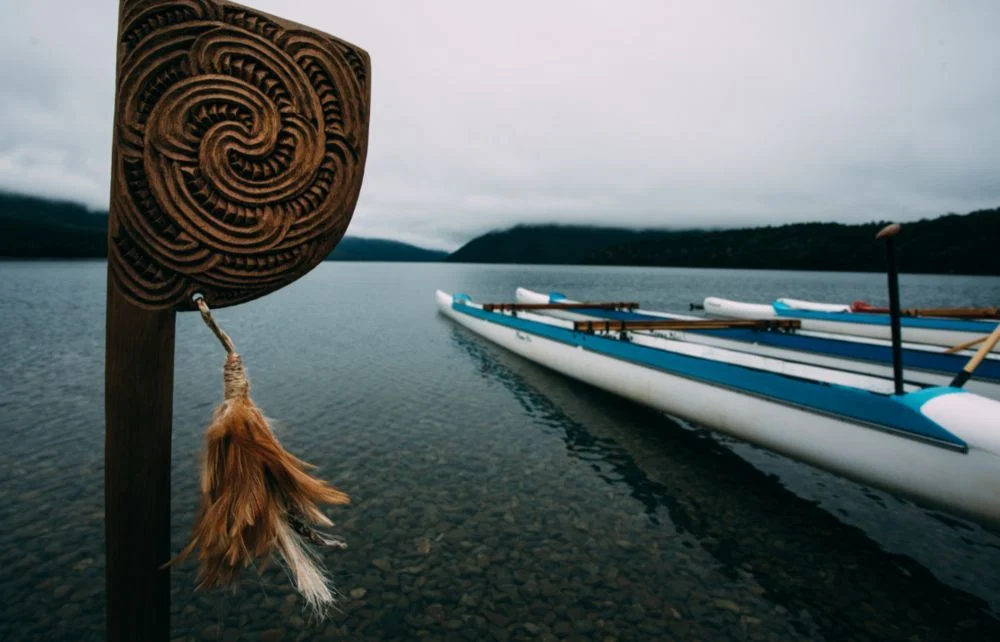
The iwi is using the occasion as an opportunity to tell its own unique story and revisit the traditions of their ancestors, who, after all, were outstanding navigators in their own right, by building their own waka tāngata.
Ngāti Apa ki te Rā Tō cultural advisor Kiley Nepia, who also manages Omaka Marae, says Matariki has historically been a time to reflect and acknowledge the past and set a plan for the future.
And rather than be a token gesture, he says it’s important that the true meaning of Matariki is celebrated.
“The stars and that type of knowledge was really important for our ancestors and in particular our Polynesian ancestors in that they were very in tune with Matariki, and the stars and the movements of the stars. As the tohunga [leader] would see Matariki for the first time, he would be able to read different signs depending on what star was brighter than the other and so on and so forth,” he says.
The cluster is made up of nine stars, each holding its own meaning.
“Some are related to land, some are related to trees, some are related to fresh water, others are related to sea water. It’s also able to give you a bit of an indicator, you know, are your crops going to be well this year, are the tuna going to be fat and juicy, is the whitebait going to be running; all those type of things,” Kiley says.
One of the stars within the cluster, Pōhutukawa, acknowledges people who have passed since the last rising of Matariki, while Hiwa-i-te-rangi is a star associated with good fortune for the future.
During recent years, dawn ceremonies have been held at Wairau Bar, the home of New Zealand’s first settlers who arrived from Polynesia by waka, and a wahi tāpu (sacred place) of one of Kiley’s other iwi, Rangitāne o Wairau.
“To think that those are the same stars that navigated our original ancestors to this land, that’s something really special for us. And when I go out there and I gaze upon those stars I think ‘far out’, you know, these are same stars that my tīpuna [ancestors] used to navigate their way from Polynesia to here, to Wairau and to Te Tauihu [the top of the South Island].”.
And so, guided by the past, and looking to the future, the iwi is hoping the stars align for its waka project, named Hoe Kia Rite, or literally, ‘Pick up your paddle’.
It’s already proving popular with iwi members, and now the hard work of training a competent crew begins, so the iwi will be ready to greet the Tuia 250 flotilla when it sails into Meretoto/Ship Cove in November.
“It’s exciting, and it’s exciting to see our whānau really getting stuck in and interested. It would be great to see in the next five to 10 years that we have some of our youth of today doing those voyages back to Polynesia, back to some of those islands that we come from and connect to.”
