
Ever wondered if you can take a toddler on an overnight hike?
Of course you can! And depending on your expectations, your toddler’s temperament, your planning and a great deal of luck, you might even enjoy it too.
My partner and I are keen trampers, and before the birth of our first child were very excited at the prospect of exploring some of our favourite spots and camping out under the stars with our new family member.
We were given a baby backpack at our baby shower and bought a very light and compact cot for all the travelling we were going to do with our little one.
Then the baby was born, and as expected, looking after a newborn was hard - but it was far more difficult than I ever imagined.
Long story short, it was a good two years before our equilibriums had adjusted sufficiently to even think about embarking on an overnight hike with our little girl.
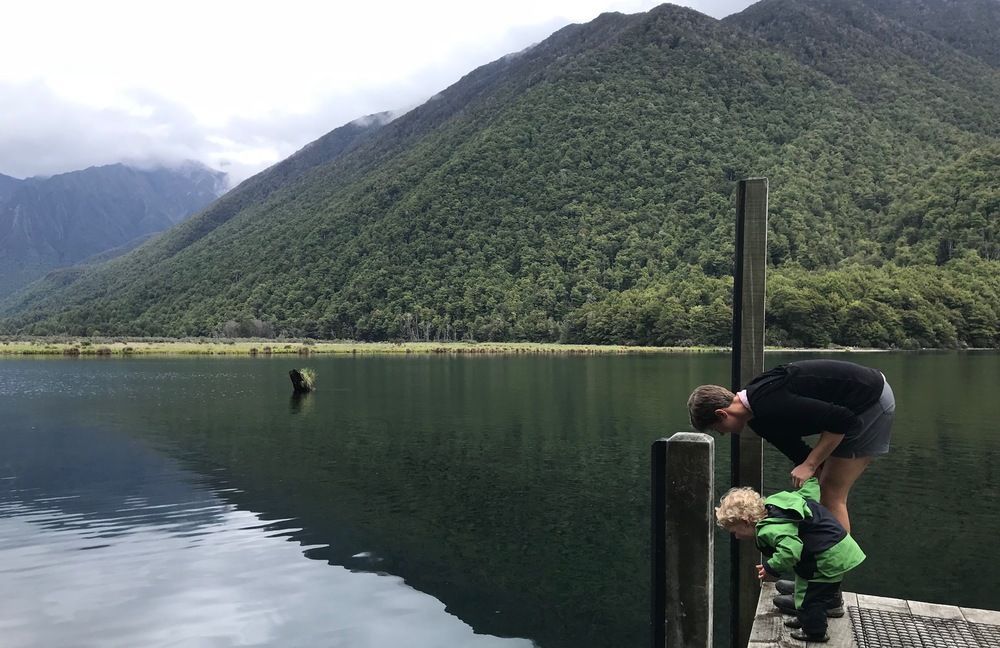
The view up the Travers Valley from the jetty on Lake Rotoiti near Lakehead Hut. Photo: Kat Pickford
A friend and I had done an overnight hike around Lake Rotoiti in Nelson Lakes National Park the weekend before, and decided that the track was easy and flat enough to attempt with toddlers.
My partner was instantly on board, and preparations began.
Packing for an overnighter is pretty straightforward, and we simply applied the same logic when packing for our tot - she needed to be warm, as dry as possible and well-fed.
We decided to stay in a tent, because as any parents of two-year-olds know, they can be prone to sudden, very loud and prolonged bouts of crying (screaming), and we just didn’t want to risk dealing with that in the middle of the night with a bunch of resentful strangers shooting daggers at us in the dark.
Because we decided to stay in a tent, we also had to pack bed mats. We packed an extra sleeping bag for the nipper and an umbrella because rain was forecast and we thought it would be useful as an instant shelter for making lunch and changing nappies under.
We packed an emergency locator beacon, first aid kit, a bottle of Pamol for our teething youngster and a bottle of red wine decanted into a lightweight, foldable plastic bottle.
Carrying a tent made for heavy packs, but was well worth it with our toddler's unpredictable sleeping habits. Photo: Supplied
As you may have realised, we are not members of the lightweight tramping community, we like our food too much to eat freeze dried goop - unless we’re on day nine of a 10 day hike.
We stopped about four times in the first 200 metres, adjusting packs, shedding layers and getting snacks to feed our insatiably hungry child.
It quickly became apparent that what had been an “easy” and “flat” walk for two adults carrying 14kgs, soon became a challenging slog with 22 kg each on our backs.
I’d also over estimated my child’s abilities. Track knotted with roots usually stomped over with sure-footed ease by adults, became a spider web of trip wires for our pint sized adventurer.
Stones became boulders, steps became climbs and steep cliffs dropping down to the freezing lake became magnetic force fields, mysteriously drawing her towards every precipitous edge.
Fortunately, she wasn’t that interested in walking for too long, preferring to sit in on my back and be hand fed bananas, nuts, raisins and muesli bars by willing slaves - heck who wouldn’t prefer that?
Four hours and 10 kms later we arrived at the Lakehead campsite. It’s a beautiful, flat area well protected from the rain by huge beech trees and close to the facilities - a tap, three long drops and a 26-bunk hut.
What was "easy, flat" terrain for adults, was challenging for a toddler. Photo: Kat Pickford
Our little bush baby suddenly became enthusiastically involved in everything: putting up the tent, collecting water and firewood, digging in rotting logs with sticks, inspecting ants, clambering over tree roots and rolling in the long grass.
It’s a relatively safe area for a toddler to roam around, far from the lake and any rivers, although we still kept her in sight the whole time, which wasn’t exactly relaxing.
We decided to hit the sack around 9pm, when it started getting dark. This was the less fun part of the trip.
Remember those sudden, very loud and prolonged bouts of crying (screaming) I referred to above?
We huddled in that tent rocking and cuddling and patting and shushing for a full hour before she finally settled down to sleep between us.
Then she woke up when the sandflies started biting at 4.30am. This is why we decided to sleep in a tent.
But we’ve had far worse nights than that at home, and all would have been fine, except my poor partner scratched his eyeball when collecting firewood and didn't sleep a wink because he was in so much pain.
Needless to say we were like the walking dead hiking back out again. My partner with his bung eye and our wee one looking like a tiny spotty teenager with a face full of sandfly bites.
We felt well and truly beaten.
But despite the challenges it was a great experience and we learned a lot from it.
Give her enough time and hopefully she’ll get used to sleeping in a tent, and one day, she’ll be big enough to carry her own weight, and even her own gear too.
If you haven’t completely been put off by my account, and are thinking of tackling an overnight hike with your toddler, you may find the following tips useful.
Safety first. We could have saved a lot of weight by not packing as much, but it’s always better to be safe than sorry. Items like spare clothes, first aid kit and personal locator beacons are rarely used, but are absolutely essential in a worse case scenario.
Cotton kills. Ditch the cotton and denim and layer up with thermals made of merino or synthetic fibres and fleece which helps keep you warm when wet.
Take your time. Allow yourself more time than what you think you need. Toddlers are contrary and unpredictable creatures and we found it far more enjoyable to go with the flow and give her time to dawdle and poke around, without having to stress about the time.
Fly spray. Extra weight but well worth it to avoid 5am wake ups from biting midges and looking like neglectful parents for the next two weeks while the welts on your kid’s face heal.
Go easy. Don’t be too ambitious on your first hike. Consider a short hike or a track with an option for boating or driving part or all the way.
Have fun. Sing songs, make huts, watch the clouds, look for insects, play chase, involve your child in the preparation and process as much as possible.
If you take your toddler tramping, I’d love to hear about your experiences. Head over to our Facebook page and leave a comment, or email me: thekatpickford@gmail.com
