
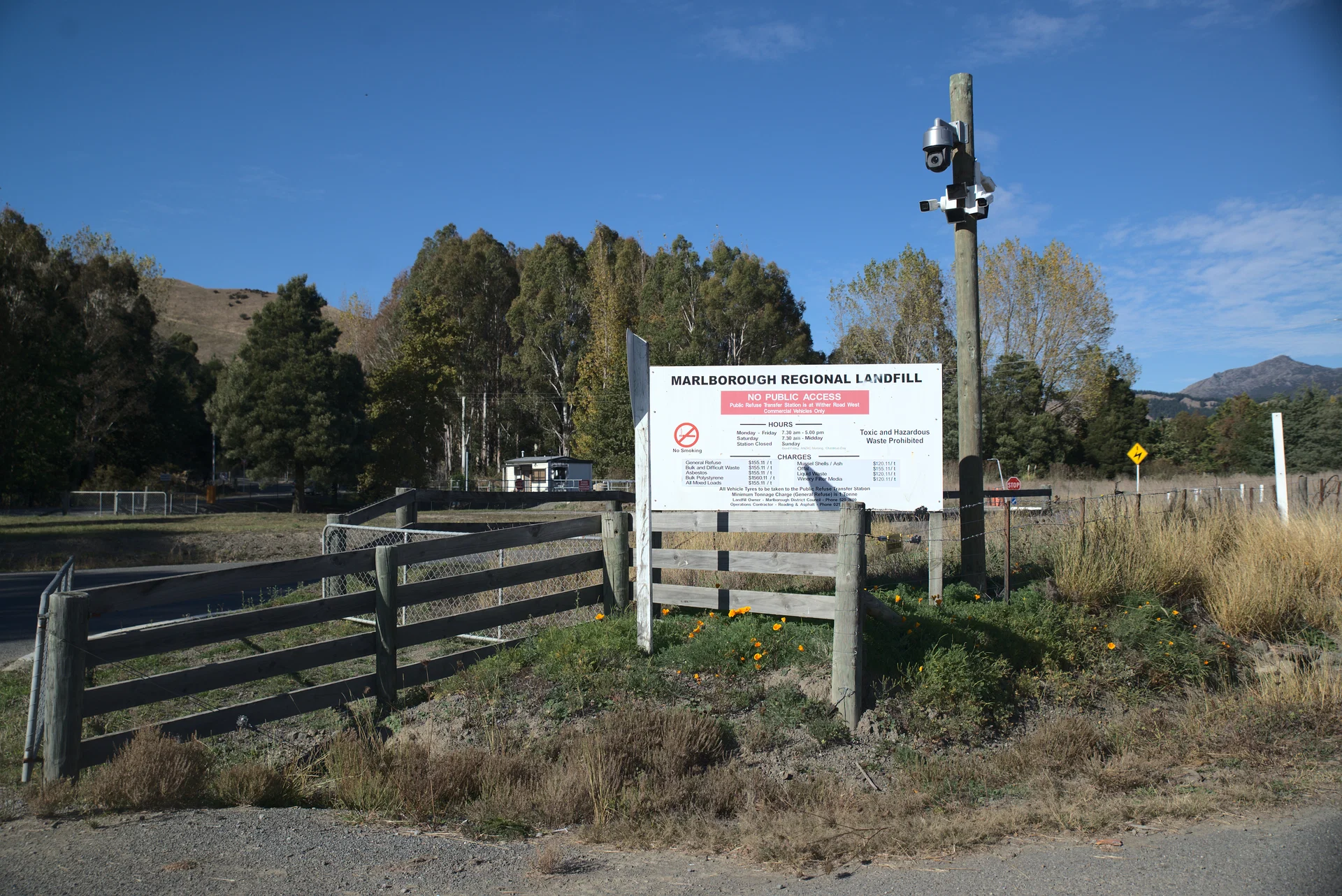
Residents in the Boulevard Park on Taylor subdivision in the south of Blenheim say the stink from the Bluegums Landfill are impacting their lifestyles.
“It’s putrid,” says one resident who wanted to remain anonymous. “We’ve been here for six years, and it’s been ongoing.”
He says windows can’t be left open on warm nights and friends aren’t invited around for a barbeque anymore.
“You’re silly if you leave your washing out overnight,” he says. “It’s affecting people’s lives, definitely your lifestyles.”
A warm summer has meant that high numbers of salmon in Marlborough fish farms died and have subsequently been dumped.
Between December and February, trucks from Havelock and Picton made 160 trips to the Bluegums Landfill, dumping 1269 tonnes of dead fish and waste from New Zealand King Salmon farms, according to environmental watchdog Guardians of the Sounds. The organisation obtained figures showing more than 600 tonnes of the dead salmon were dumped in February alone.
“We believe it shouldn’t go in there at all,” the resident says.
Another subdivision resident, who also did not want to be named, says the odour has grown more offensive since the fish have been dumped at the landfill.
“The frequency of the smell and the intensity of the smell has definitely gotten worse.”
He says the Marlborough District Council hasn’t been helpful in addressing the issue over the years.
“It’s a council subdivision. In retrospect now, I don’t think it should ever have been built. They should never even have built houses so close to the landfill ... I think they have a responsibility to do something about it.”
A December 2020 report about the Bluegums Landfill references several complaints about odours which were received by the council.
Compliance officers visited some complainants’ properties and “no objectionable odour” was noted.
But the resident says this isn’t surprising.
“You might ring them [compliance service] up at 8pm, but they mightn’t arrive until 11 and by then the smell has dissipated.”
He is also concerned about the effect the odours may have on the health of those living nearby.
Several procedures are in place to limit the odour coming from the landfill including limiting the amount of odorous waste that can be dumped, making sure no more waste is uncovered than necessary, ensuring minimal excavation into existing waste, and operating an irrigated spray system which is meant to disrupt odours.
Marlborough District Council solid waste manager Alec McNeil says that the recent reports of odours in the vicinity of the landfill are being investigated, but they currently believe the odours are from two industrial sources of waste which have been stopped.
“We first need to determine if the odour is from the landfill itself or from the leachate flowing through the sewer system, or is a combination of both,” he says.
“We are considering possible solutions, which could include a combination of landfill management systems and pre-treatment by those industries contributing the waste.”
Any new measures would be in addition to the current odour-managing system which was extended earlier this year during the construction of Stage 8 of the landfill upgrade.
By Max Frethey
