
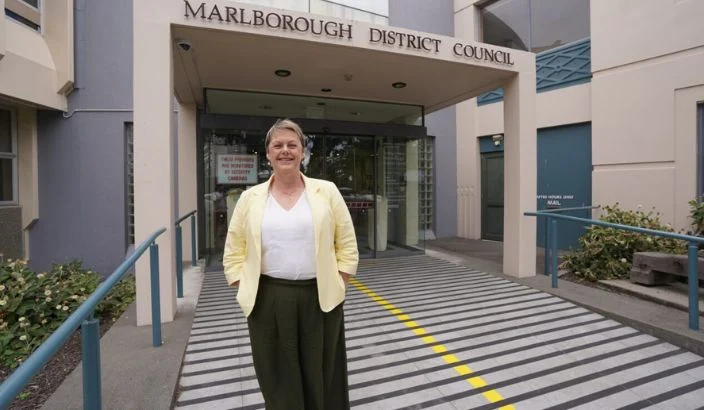
Marlborough Mayor Nadine Taylor says 2025 marked major progress for the region, with critical infrastructure projects completed, a local election, and new opportunities emerging.
After her re-election in October, she says the council delivered on key priorities despite the challenges of elections and national reforms and sees the next two years as full of promise.
“I started 2025 knowing it would be a big year, with infrastructure projects we needed to nail like the Sounds road recovery, which is ahead of schedule, under budget and getting fantastic feedback from residents, funding the Spring Creek stopbank project and Picton’s London Quay upgrade transforming the foreshore for both retailers and shoppers,” she says.
“We’ve had an election, put a new council together, and we’ve continued to deliver everything else that Marlborough needs along the way.
“For me, it’s onwards and upwards into 2026 building on more of the same, making sure we focus on those core needs of the community, but keep delivering what makes Marlborough special.”
Looking to 2026, Taylor says revitalising Blenheim’s town centre is a priority, along with upgrades to the pavilion at A&P Park and responding to national government changes.
"We want to create spaces people love to use, and town centre is a focus for 2026, especially with our new councillors sharing that as part of their platform.
“We have to help the town centre find its own identity now - work is starting already with the Summer Sounds and the ice rink, but the big thing for the town centre that we have programmed for next year is replacing those slippery pavers which are a health and safety hazard.”
On a national scale, Taylor says local government reform and the new Resource Management Act will dominate 2026, but Marlborough’s unitary authority model positions it well.
“We don’t have to have that conversation about reforming two councils into one – I’ve already had several mayors reach out to me about unitary councils – but we also must embrace the new RMA that’s coming out and the planning for the rates capping for 2029.
“Council needs to make sure everything we deliver is tight with the cost-of-living ruler run over it, but that will also mean a few difficult conversations with our community because in achieving rate levels, there will be services we will have to cut back.”
Nadine sees continued opportunities in aquaculture, viticulture, and ecotourism as ongoing building and biodiversity projects continue, as well as emerging sectors she believes the region can lead in future.
“Growth within existing strong industries is why council worked so hard with NZ King Salmon to ensure that their manufacturing could come here,” she says.
“I would like to see a level of diversification if we can achieve that, while remembering that all regions have their iconic industries that underpin their GDP.
“Puro’s medicinal cannabis is showing that they could become another iconic industry and a high-value product for Marlborough, I understand that there’s real interest in apples at scale being brought back here into Marlborough, and we’ve just started to learn about what we can achieve in agri-tech automation through the viticulture industry.”
Ahead of summer and the next electoral cycle, Taylor describes the council as “energised”, with new councillors bringing fresh ideas and a region that has plenty to offer.
“People are choosing Marlborough for its lifestyle and opportunities. We’ve got mountains, rivers, arts, and culture – and a strong sense of community,” she says.
“It’s pretty heartwarming when you talk to people and they say ‘I’ve chosen Marlborough because I can’t believe what you’ve got here’, so I’m excited to tell that story out there more widely, because I think Marlborough is just coming into its own.”
