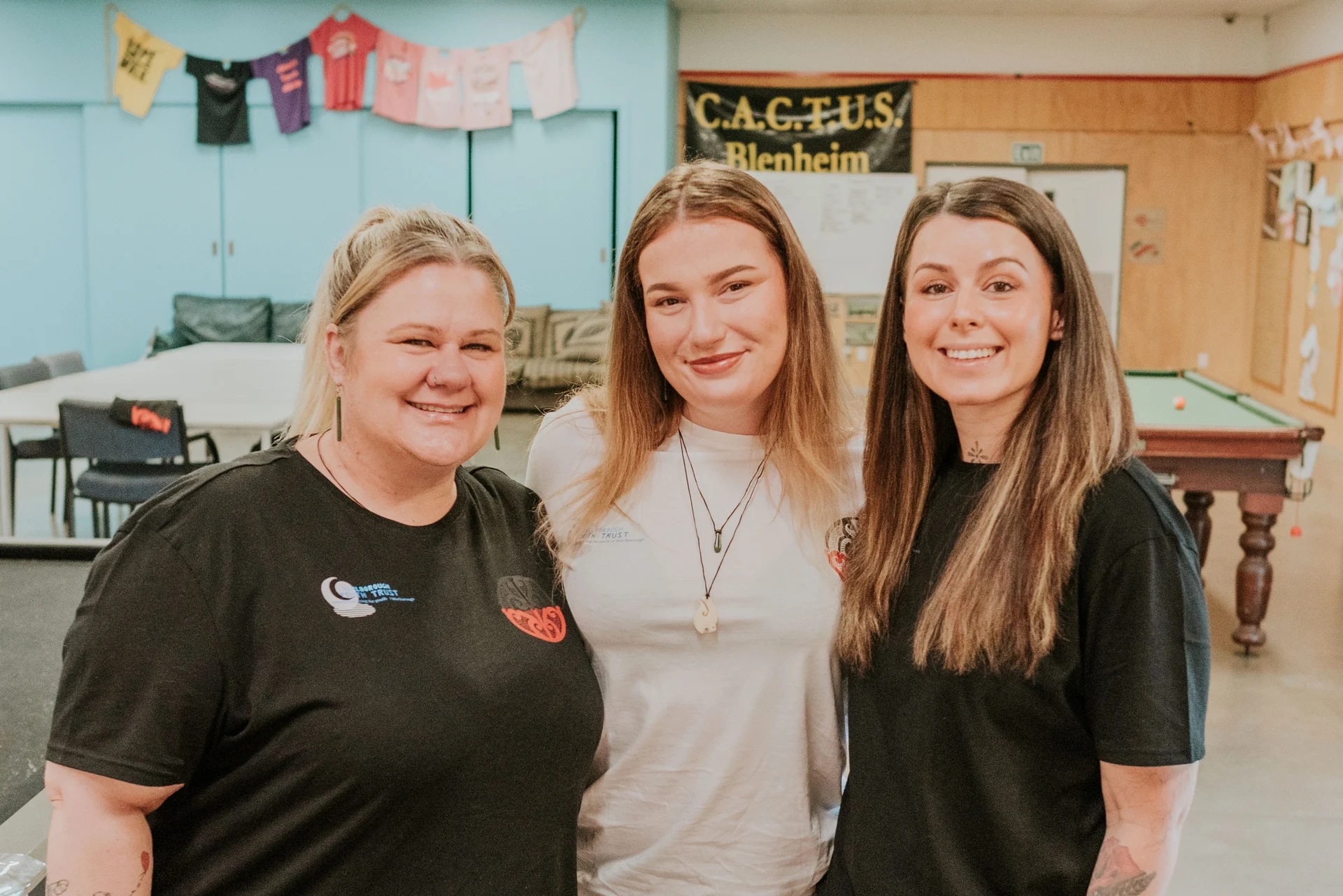
Step through the doors of Marlborough Youth Trust (MYT) and you enter a space designed for the region’s young people. Manager Maxine Sweeney and youth workers Canada Harmony and Taylor Woodgate – who first came to MYT looking for help – share what local young people are facing and what makes this space special. As told to Amy Russ.
How would you describe the space to someone who had never been here?
Maxine: Don't judge a book by its cover. From the outside, MYT might look like just another building, but once you step through the door, you'll find a space where everyone is welcome and nobody is judged.
Canada: Imagine a TARDIS in bag form – from the outside, you might not realise just how much is inside. That’s what the MYT space feels like. There’s something here for everyone, and the space can mould itself around the young person who walks through the door. Our youth workers all bring different skills, experiences and strengths, so there’s no one-size-fits-all approach. It’s more like Cinderella’s slipper and we work with each young person to find what fits them. Most importantly, you don’t have to pretend to be anyone you’re not. You can arrive as you are, take a breath, and just be.
Taylor: It can look intimidating and like a huge space but once you get into it and more comfortable it can be a really cool opportunity to gain things like licenses and job opportunities. Even just gaining confidence was huge, thanks to the awhi and support.
What happens here on a typical day?
Maxine: You may see our employment programmes helping young people gain the confidence and skills needed for work, or Rangatahi Tupu supporting young people who don't quite fit into the traditional square box. We believe it's okay not to fit the square. Some people are circles, triangles, stars, or a completely different shape altogether, and that's what makes them amazing. Amongst all of this, there are young people sharing kai, playing games, creating art, studying, having conversations, and finding their place. Every day brings new opportunities, challenges, and successes.
Canada: There’s always something happening, but there’s also room for young people to simply be. Throughout the day, we run programmes focused on employability and building practical life skills. We facilitate classes and connect young people with opportunities in the community. And then there are the everyday moments; sharing food, having a yarn, playing a game, listening to music, asking for help or supporting a friend. We’re a family here, and we do it together.
Taylor: A typical day sees a wide range of things. We currently have Rangatahi tupu and YEP (Youth Employability Program) happening most days of the week as well as our other programs along with all of our behind the scenes planning for community events.
What do you love most about the space?
Maxine: I love that we see the gems and gold nuggets that can sometimes be overlooked or underestimated. We often meet young people who don't yet see their own strengths, but we do. We see their potential, their talents, their kindness, and the incredible things they are capable of achieving. I also love seeing the softer side of rangatahi who may seem tough or guarded on the outside. When young people feel safe, accepted, and valued, they begin to show who they really are. Watching that trust grow is one of the most rewarding parts of what we do.
Canada: The lack of judgement. MYT is a safe space where young people can come as they are. You don’t walk through the door having to prove yourself or have everything figured out. Sometimes a young person can’t see their own strengths yet. That’s okay. We’ll help them find them, and then we work alongside them to build on those strengths.
Taylor: The thing I love most is hearing the laughter come from our rangatahi and seeing first-hand their progress and achievements they gain from being on our programs or just being in our space.
What are young people in Marlborough telling you they need right now?
Maxine: That they need support with their mental wellbeing. They are worried about housing, food security, and what the future holds. More than ever, they need positive messages about what's possible for them. They need opportunities, practical support, and people who genuinely believe in them. Most importantly, young people want to be heard and seen. They want to know that their voice matters and that there are people willing to walk alongside them while they figure life out.
Canada: The interesting thing is, they don’t always tell you straight away. Sometimes you have to listen to what isn’t being said. You have to build trust, spend time with them and understand what’s happening beneath the surface. Young people want connection. Often, what they need most is someone to notice, listen and walk alongside them.
How important is having a physical space that belongs to young people?
Taylor: It's really important to have a space like we do, that welcomes and holds a safe space for all walks of life. This wasn't something I had when I was younger and I think it would have saved me from a lot of bad choices.
If the walls of MYT could talk, what stories do you think they would tell?
Maxine: They would tell stories that would make you laugh, cry, and feel incredibly proud. They would tell tales of some of the toughest young people in town putting on formal gowns and learning to waltz across the floor. They would tell stories of mock courtrooms filled with lawyers and judges, employment workshops, art projects, and endless laughter. The walls would remember the loyalty young people have for this place. They would remember the heartbreak of losing rangatahi too soon and the joy of celebrating achievements both big and small. The walls would remember the eyerolls when we share wisdom that young people call lectures. They would remember moments of accountability, growth, challenge, belonging, and the occasional growling tummy waiting for kai. Most of all, the walls would hold the love of every rangatahi who has walked through these doors.
Canada: It’s like Fight Club... top secret! There are stories in these walls that will never leave this building. Stories of hard days, breakthroughs, laughter, tears, friendships, first jobs, big decisions and small victories. The walls have seen young people walk through the door unsure of themselves and, over time, start to see what we could see in them all along. If the walls could talk, they’d probably have a lot to say. But they know better than to tell.
Taylor: They would say, 'you belong here exactly as you are'.
