
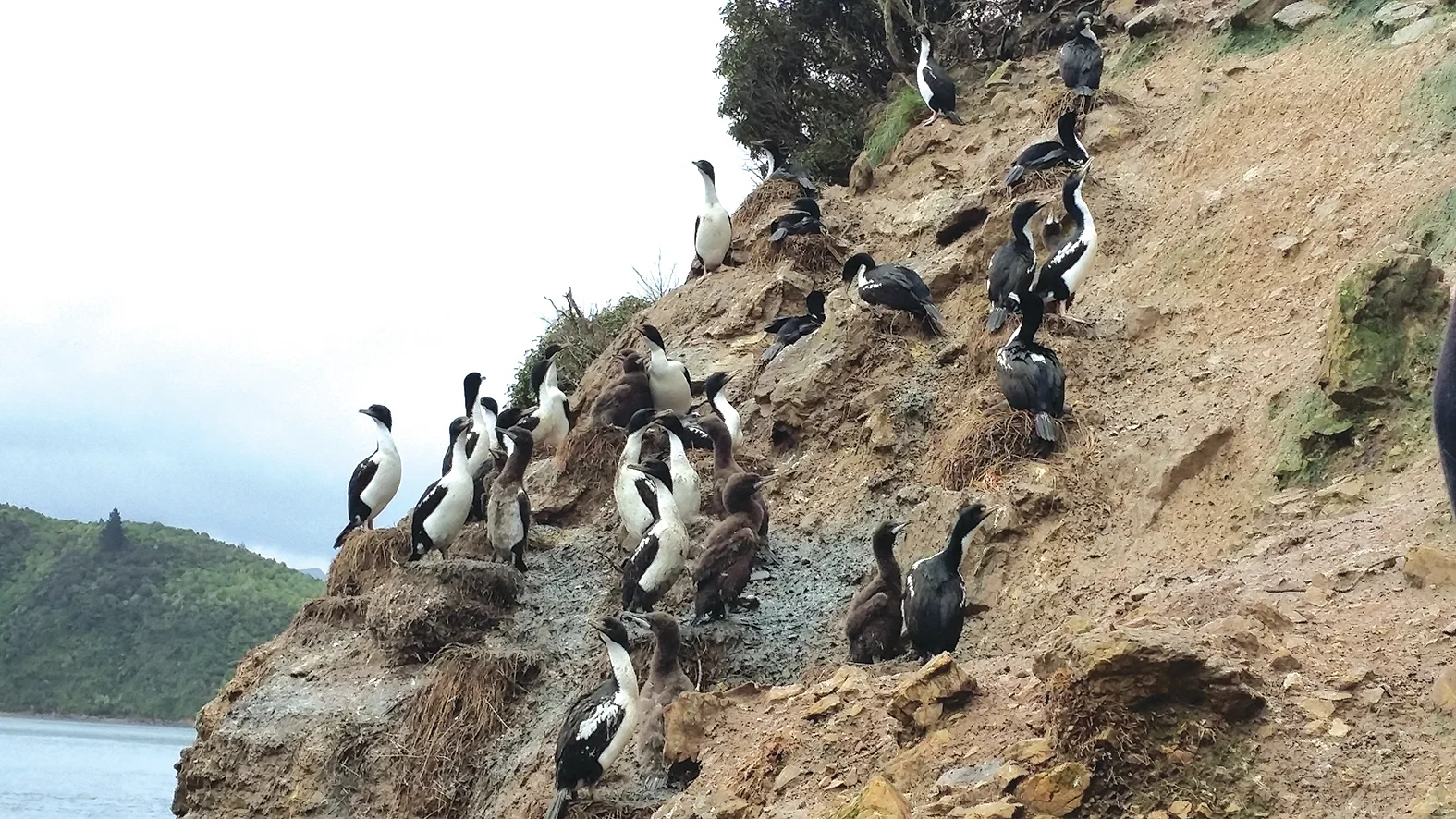
A sharp decline in the Marlborough Sounds’ endangered king shag population has prompted renewed calls for boaties to give the birds more space when on the water.
The Department of Conservation says king shag numbers have fallen by about 30 percent since 2021, with the population now estimated at around 550 birds after several years of poor breeding success.
DOC Principal Ranger for the Sounds District Dan Palmer says the decline is a warning sign for the species, which is found only in the Sounds.
“This decline shows this iconic Marlborough bird is facing real pressure in the wild,” Dan says.
He urged people using the Sounds to stay at least 100 metres away from king shag colonies and roosting sites, saying the birds are easily disturbed and can abandon nests when vessels, including kayaks, get too close.
King shag colonies are located near several popular fishing and wildlife viewing areas, including Sentinel Rock, Duffers Reef, White Rocks, North Trio/Kuru Pongi and Blumine Island/Oruawairua.
While king shags are often mistaken for the more common pied shag, DOC says there are several key differences.
Unlike pied shags, king shags do not scavenge around boats and generally avoid people. They are larger and more robust, have distinctive pink feet and nest on rocky outcrops, while pied shags typically nest in trees.
Marlborough District Council’s Head of Environmental Policy Pere Hawes says new rules in the Proposed Marlborough Environment Plan establish 100m exclusion zones around breeding sites to reduce disturbance.
“By minimising disturbance caused by boats, adults are more likely to stay on their nests.” While the exact cause of the population decline is unclear, DOC says it is likely linked to several factors, including climate-related changes affecting food supplies, weather events and human disturbance.
The king shag is a deep-diving seabird that feeds on bottom-dwelling fish species including lemon sole, opal fish and witch, and depends on a healthy seafloor ecosystem.
DOC is also warning that the arrival of H5 bird flu in the Sounds could create an additional threat. Because king shags nest in colonies and roost together, the species is considered particularly vulnerable to an outbreak.
Dan says overseas experience showed bird colonies had a better chance of recovering from disease outbreaks when left undisturbed.
“Giving king shags space around colonies and roosting sites is a simple way people can help protect this endangered species.”
DOC plans to carry out research during next winter’s breeding season to investigate the recent decline in chick survival.
People who find groups of three or more sick or dead birds or seals are being asked to report them to the Ministry for Primary Industries and avoid handling the animals.
