
Spring Creek flood protection project on course
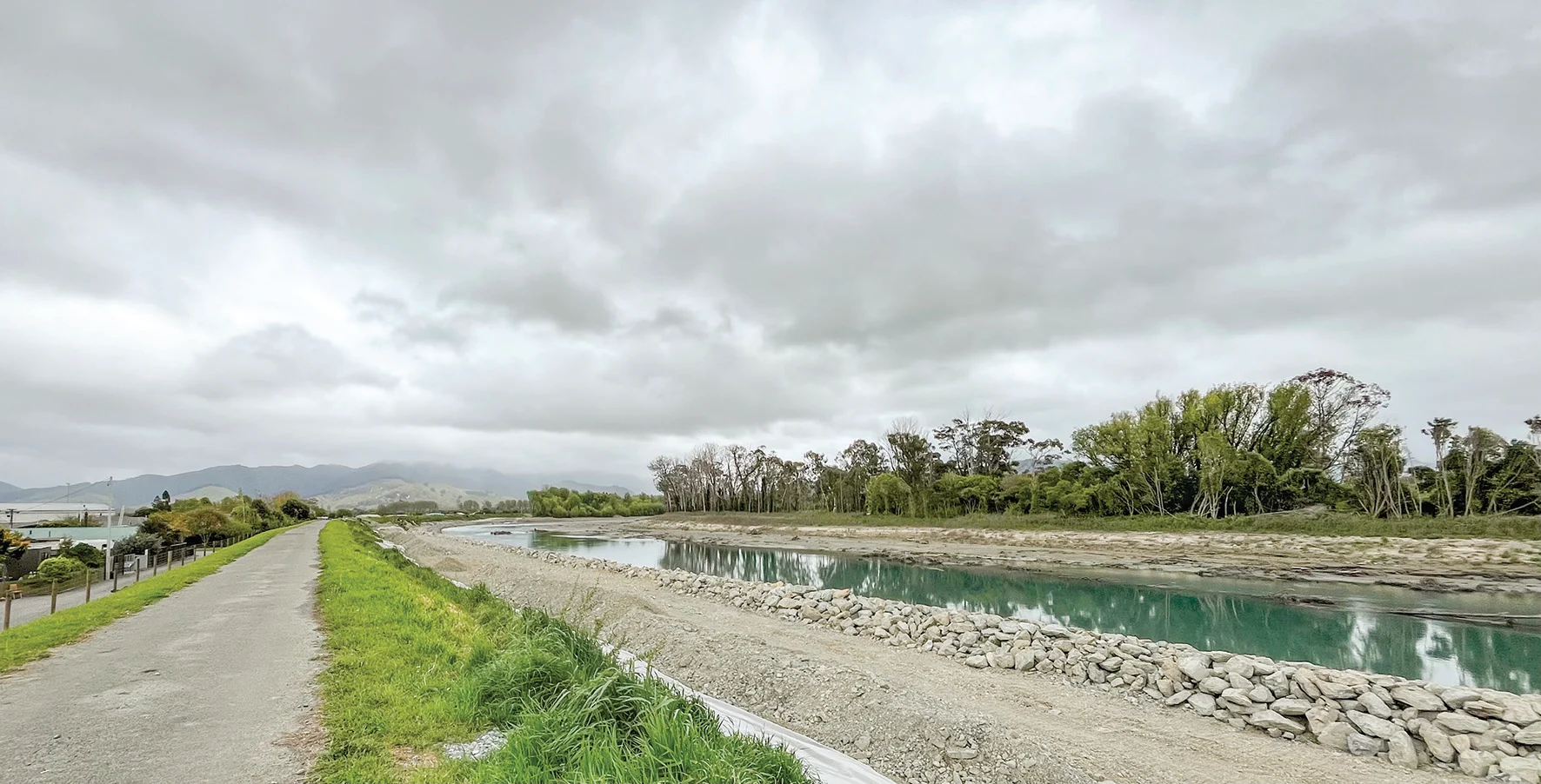
The rebuild of 1.2 km of stop bank behind the township of Spring Creek is the largest river protection project undertaken in Marlborough since The Diversion was constructed more than sixty years ago.
Work has not stopped on the project since it began in November last year, with completion expected by June 2027.
Mayor Nadine Taylor said the project was particularly important for the residents and businesses of Spring Creek but also for nearby national infrastructure including SH1 and the Main North Line rail corridor. The project has not been without its challenges including maintaining consistent and suitable rock supply, which had been more difficult than initially expected.
Most of the rock placed so far, around 160,000 tonnes, has come from nearby Pukaka Quarry with Barracks Quarry from the other side of Blenheim supplying some material. Council’s ownership of Pukaka had meant savings for the project overall, rather than having to source all the material from commercial quarries.
“The delivery parties involved have been instrumental in the success of this project to date, overcoming the challenges with exceptional support from the local community and iwi,” Mayor Taylor said.
All the in-river rock protection is now complete along with part of the lower bench. Replacement of the original stop bank, to between 1.3m and 1.7m higher, has started and is being done in sections to maintain the existing level of protection.
The work is funded by Council and Government's Regional Infrastructure Fund, which is administered by Kānoa – Regional Economic Development & Investment Unit.
Spring Creek residents are invited to attend the next update about the project’s progress on Wednesday 11 November from 6.30pm to 8pm at the community hall.
__________________
Local appointed to national Tourism Leadership Group
Destination Marlborough General Manager Tracey Green has been appointed to a new national forum focused on shaping the future of New Zealand’s visitor economy.
The Tourism Leadership Group was established by the Government to provide expert advice to the Minister for Tourism and Hospitality on implementing New Zealand’s Tourism Policy Statement.

Ms Green said she was honoured to contribute to a group tasked with helping guide the future direction of the sector.
"Tourism is a vital contributor to both the national economy and regional communities like Marlborough.
“I'm looking forward to contributing to discussions about how we can grow tourism in a way that benefits our communities, supports businesses and protects the unique places that attract visitors to New Zealand," she said.
Ms Green brings more than 20 years’ experience to the role in destination marketing, tourism strategy, regional development and tourism business growth across New Zealand, Australia and the UK.
There are eight members on the group with expertise in tourism operations, aviation, hospitality, major events, destination management, regional tourism, governance and business leadership.
Members are appointed by the Minister for Tourism and Hospitality for a two-year term and will meet at least twice a year.
For more information go to: www.mbie.govt.nz/immigration-and-tourism/tourism/new-zealands-tourism-policy-statement/tourism-leadership-group
__________________
Wairau Aquifer faces growing risks from climate volatility
Council’s latest report on the Wairau Aquifer highlights the critical role it plays in sustaining the region’s environment, economy and communities - and the mounting pressures it now faces.
Since 1973, Wairau Aquifer levels have dropped by a metre, a trend that, if allowed to continue, could threaten drinking water supply, crop irrigation and the vibrant spring-fed ecosystems that define the Wairau. The report notes a pattern of increasing volatility.
“Since 2021, we’ve recorded both the highest and lowest aquifer levels ever seen,” said Pete Davidson, Senior Groundwater Scientist. “This is climate change in action - more intense weather events on top of a long-term decline driven by reduced river recharge.”
Such extremes have real-world impacts. “We’ve seen everything from flooded basements and submerged sewer mains to receding spring flows in recent years,” said Charlotte Tomlinson, Hydrology Scientist. “This volatility is challenging for both our natural systems and the people who depend on them.”

Council is considering management options as part of its Marlborough Environment Plan and floodplain management strategy reviews, including stabilising aquifer levels and reassessing water allocation limits. Computer simulations show that fully utilising the current allocation would further reduce spring flows and amplify seasonal effects.
“Protecting the Wairau Aquifer is fundamental to our region’s future,” Davidson adds. “We need to act decisively as both climate and human pressures intensify.”
To learn more about our region’s aquifers, go to: www.marlborough.govt.nz/environment/groundwater/aquifers
