
Ten years after the Kaikōura earthquake, Marlborough is reflecting on the region’s resilience, recovery and the lessons learned from one of New Zealand’s most damaging natural disasters.
At 12.02am on Monday, 14 November 2016, a magnitude 7.8 earthquake struck, unleashing one of the most complex and damaging earthquakes in New Zealand history.
While the event bears Kaikōura's name, its impacts were felt profoundly across Marlborough, North Canterbury and Wellington.
Marlborough Mayor Nadine Taylor says the anniversary is a chance to reflect on a decade of recovery and renewal.
"Many of us remember the two minutes of violent shaking, the sleepless hours that followed and the uncertainty in the days and weeks afterwards.
“Our communities were at the epicentre of the response and recovery. Lives were disrupted, homes and buildings were damaged, roads and railways were destroyed, and some places found themselves cut off from the rest of the country."
Massive fault ruptures tore across the countryside, lifting parts of the Marlborough-Kaikōura coastline by several metres. Large sections of State Highway 1 and the Main North Line railway were twisted and buried beneath huge slips.
At least 80,000 landslides were triggered by the quake.

“Affected communities included Ward, Flaxbourne, Seddon, Blenheim, the Awatere Valley and Picton.
"The main damage was to roading, water and wastewater pipes, buildings and the water supply in Ward, whose township experienced the highest peak ground acceleration rates in the South Island. Kekerengū and Clarence, which were cut off from Kaikōura District Council services, were supported from Blenheim by our council.
“Marlborough did not declare a local state of emergency, as it did not seem that our response would exceed the capacity of our local resources.
"In hindsight, this may have contributed to a perception that Marlborough remained undamaged, particularly as there was little visible damage in Picton and Blenheim compared with Wellington, where large buildings suffered serious damage, and in Kaikōura, which was cut off and had to support a large number of stranded tourists."
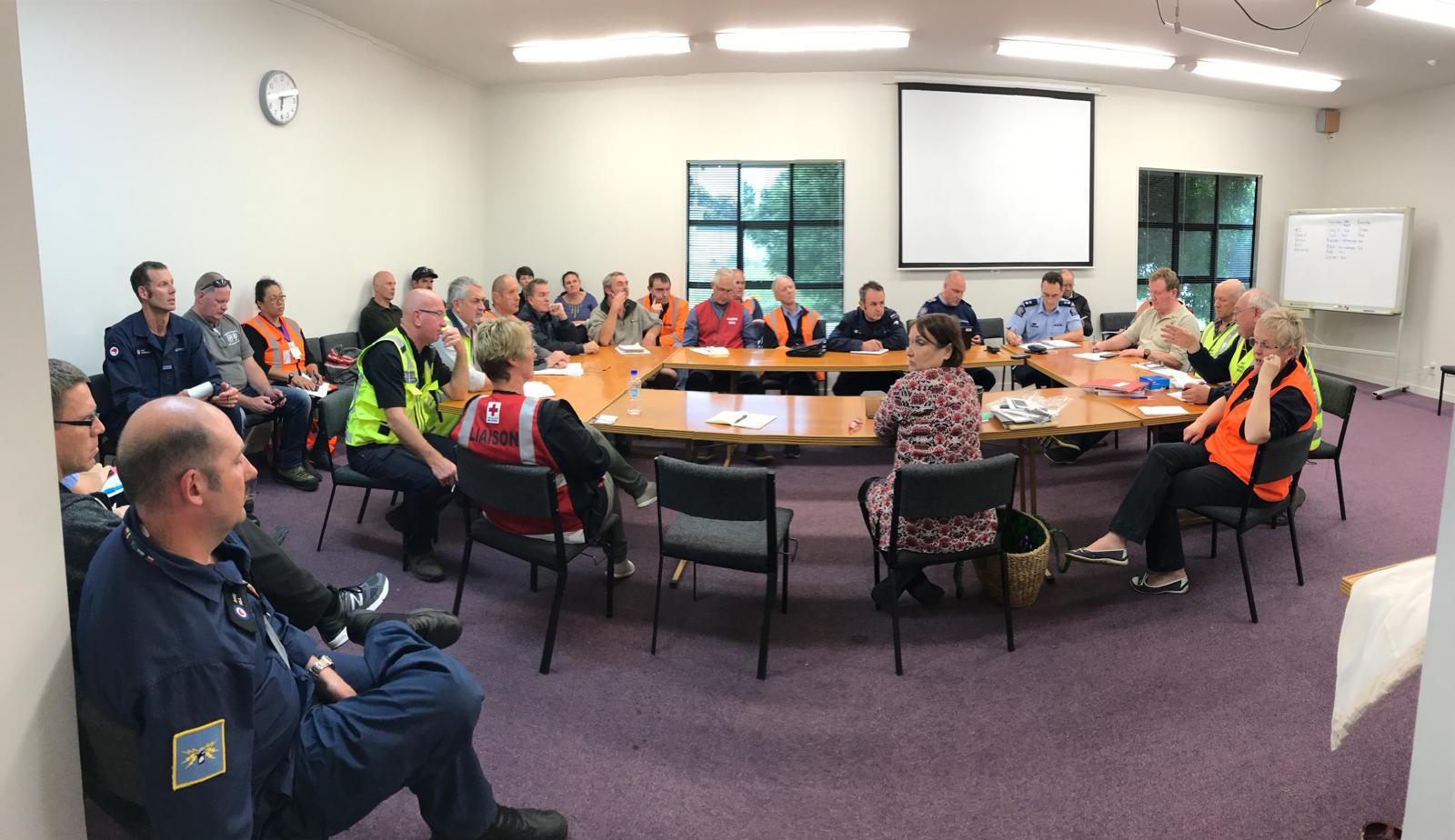
In Marlborough, emergency responders, farmers and residents became lifelines for one another as access routes were severed and communications disrupted.
"The response from local people was extraordinary," Nadine says.
"When outside help was still making its way through, neighbours were checking on neighbours, farmers were helping clear access, helicopter crews were delivering supplies and local emergency teams worked around the clock to assess damage and restore connections.
“Ward was particularly hard hit, losing its water supply, town hall and pub. The historic St Oswald’s stone church was badly damaged, and all this came on top of losing buildings in the 2013 earthquakes.”
Richard ‘Mac’ McNamara, who was Marlborough’s Civil Defence controller during the response, says the quake showed the strength of partnerships across the region, led by the Marlborough Emergency Management team alongside local and central government agencies, the Defence Force, Police, Fire and Emergency New Zealand, Hato Hone St John, Red Cross, Rural Support Trust, iwi, community organisations and infrastructure providers.
"The earthquake reinforced the importance of preparedness, robust infrastructure and strong relationships. Those lessons continue to shape how we plan for emergencies and invest in the resilience of our district. Strong communities are our greatest asset in a disaster.”

For Marlborough, the recovery also brought valuable lessons.
“One of the defining images of the recovery was the rebuild of the coastal road and rail corridor, one of the largest infrastructure recovery projects ever undertaken in New Zealand, restoring links between Picton, Kaikōura and Christchurch,” Dean Heiford, who was Marlborough recovery manager, says.
“But there were also many local recovery efforts, such as the rebuilding of Ward’s town hall and repair of its water supply. The Awatere Valley Road reopened in late January 2017 after a large slip was removed using dynamite, helicopters and a remote-controlled digger. More than $15 million was spent repairing earthquake-damaged sewerage pipes in Blenheim and Picton."
Nadine says it is important to acknowledge the emotional toll.
"For families whose homes were lost or damaged, businesses whose livelihoods were disrupted and communities that lived through months or years of recovery, the anniversary will bring mixed emotions. Tragically, two people died as a result of the earthquake.
"Today we acknowledge the strength that people showed in the face of extraordinary challenges."
She encourages residents to remember those who contributed to the recovery effort and to take practical steps to prepare for future emergencies.
"The earthquake changed our landscape, but it also revealed the very best of Marlborough. It showed our courage, our generosity and our determination to keep moving forward together."
Nadine is spending Saturday’s anniversary in Kaikōura, attending community commemorations hosted by Kaikōura District Council at the Memorial Hall.
