
TONY ORMAN
Water is the lifeblood of the community and has multi-benefits says Marlborough Federated Farmers president Evan White. He’s seen it in action 25 years ago when he worked on a dairy farm near Culverden and saw the local community impetus the Amuri irrigation scheme gave.
“The Amuri Irrigation scheme was originally government funded in the 1970's and 1980's until it was privatised in 1990. It was the Labour Government at the time that initially allowed the scheme to move ahead. It's a large scheme that currently irrigates 28,000 hectares in the Waiau and Hurunui catchments and like most irrigation projects it has had it's share of problems and cost blow-outs but really it took that area of North Canterbury from a dust bowl to a thriving pastoral landscape,” he recalls.
It’s not just farming that benefits but also the community in terms of water for firefighting and outdoor recreation such as fishing, boating and swimming.
“I think water storage has much application given Marlborough’s drought prone. I’ve had some interesting conversations on this topic and one thing is for sure, not everyone agrees,” he says.
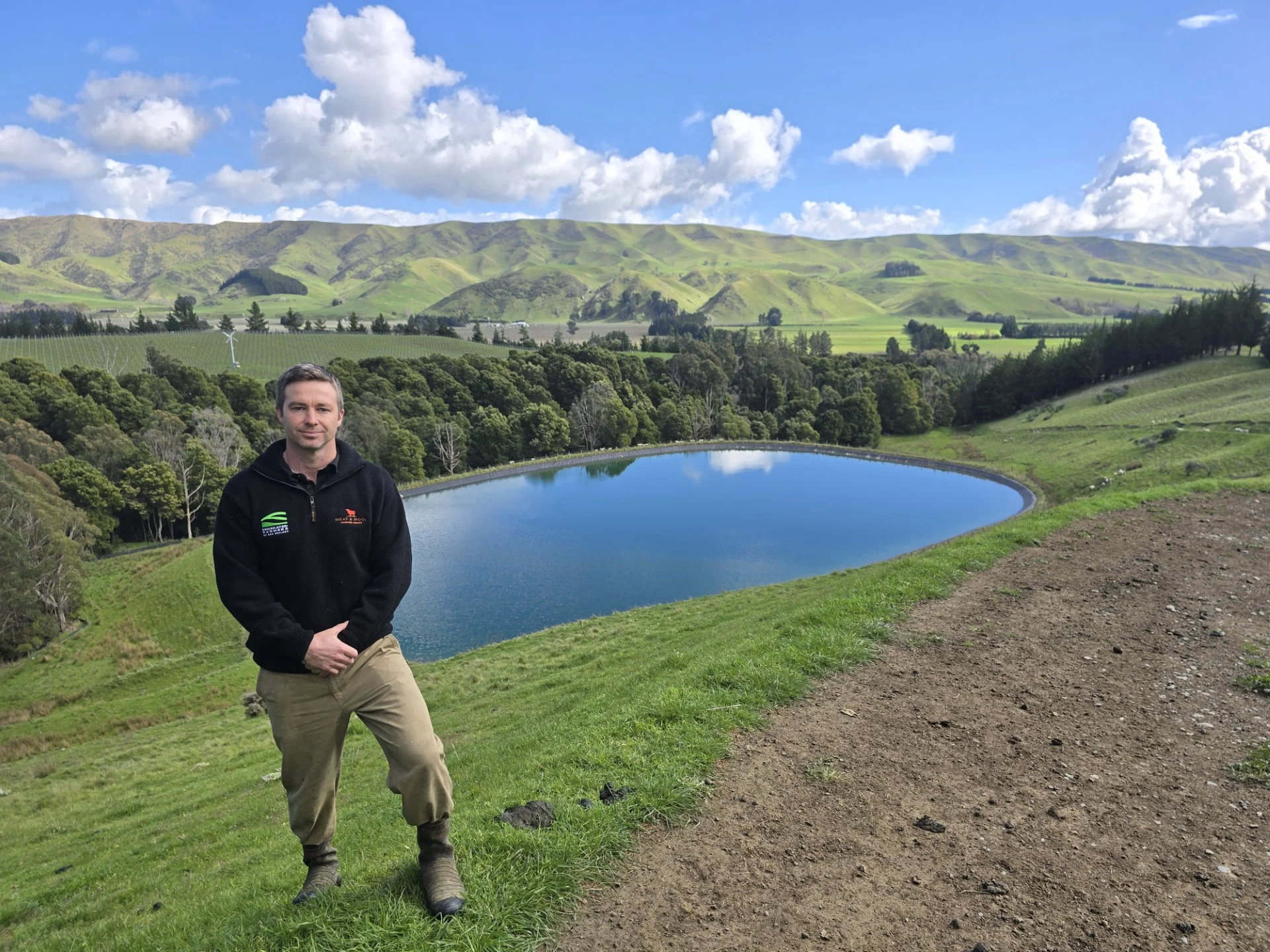
Lower Waihopai valley farmer and Federated Farmers NZ meat and wool chairman Richard Dawkins says the bigger issue is ability to capture water when it is plentiful and make it available when farmers, communities and the environment need it most.
“That challenge is becoming more pressing as weather patterns become more variable and parts of the country face greater drought risk. Major water infrastructure can take many years to plan, consent and build, which means the decisions we make now will shape our resilience for decades,” he says.
He cites the examples of Tasmania where rather than leaving individual communities to develop complex water projects largely on their own, the Australian state has taken a more coordinated approach.
"A dedicated entity brings together specialist expertise, assesses potential schemes and helps move viable projects through development. That creates continuity from one project to the next and means lessons, engineering expertise and commercial experience are not lost each time a new proposal begins. In New Zealand, by comparison, development has often been fragmented, with individual communities repeatedly having to navigate the same difficult process.”
That is why there is a strong case for New Zealand to consider a dedicated national capability for water infrastructure.
Large projects require significant private and public investment, yet developers can face uncertainty around consenting, project timeframes and future operating conditions. Local communities can also spend years trying to build the expertise and momentum required to get a proposal off the ground.
A more coordinated approach could identify promising projects early, rule out those that do not stack up and create a credible pipeline of schemes capable of attracting investment.
The benefits of storage also extend well beyond irrigation.
Well-designed projects can support environmental flows, town water supplies, recreation and greater resilience during dry periods. Reliable water can also change the investment decisions farmers and growers are prepared to make, particularly in areas with productive soils where access to water is the limiting factor. In some regions that could support higher value land uses and the processing, employment and infrastructure that come with them.
“The opportunity now is to stop treating water storage as a collection of isolated local projects and start viewing it as nationally important infrastructure,” says Richard.
