
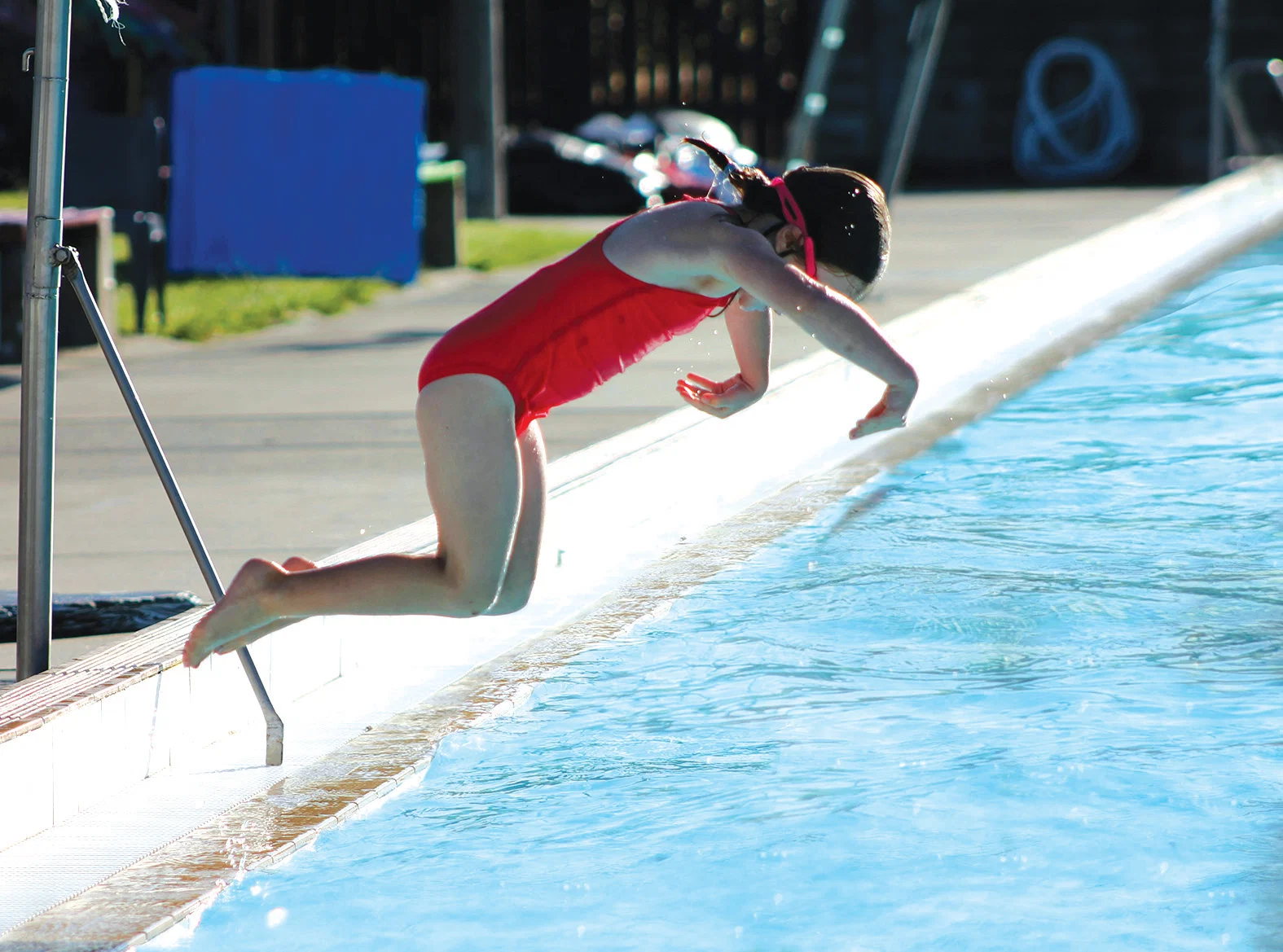
Marlborough Provincial Rural Women are on a mission to bridge the water safety gap for rural children, aiming to raise at least $50,000 over two years to fund swimming lessons for preschoolers.
Vice President Glenda Robb says the team hopes to build an investment large enough to generate interest payments to fund grants for rural families across the region who face barriers to teaching their children to swim.
Their fundraiser began last month with a peony sale, with larger events and grant applications planned over time.
Glenda says the idea came from witnessing the unique challenges rural families face around pool access and water safety.
"The distance and cost of attending a swimming pool and lessons are a huge barrier for parents.
"In rural areas, of course, there are dams, creeks, water troughs, the sea and many other trouble spots that preschoolers can reach."
Jo Blue, who runs a farm in the Awatere Valley, agrees rural children face greater dangers and understands the challenges of building swimming confidence with limited local facilities.
"Luckily we have got a swimming pool here, so I took both of my children every week. But I grew up on a farm too, and it's been a huge issue over the years.
"There's so many families who have been involved in drownings on farms.
"We have ponds and dams and toddlers wander off... so sadly it has been a big thing here."
Water Safety New Zealand Chief Executive Glenn Scanlon says building water confidence from an early age is vital to preventing drownings, particularly around rivers and shorelines across the Top of the South where most incidents happen.
Older men currently account for 80% of drowning deaths each year in New Zealand.
"Teaching kids young means hopefully they don't face that situation when they're older because they have the skills and awareness. And hopefully they can help influence their dads and their granddads to make better decisions, too," says Glenn.
Seven drowning deaths were recorded across Nelson and Marlborough between 2015 and 2026.
While New Zealand has made progress in reducing drownings over the past decade, Glenn says there is still plenty of work to do.
Across all primary and intermediate school children nationwide, 250,000 cannot afford their own swimming or water survival lessons. Water Safety New Zealand funded lessons for around 112,000 children last year.
"That's why it's fantastic that Rural Women are wanting to do this work. It's by working with different people in different places that the message gets out, the funding gets raised, the education gets delivered, and we help solve the problem," says Glenn.
