
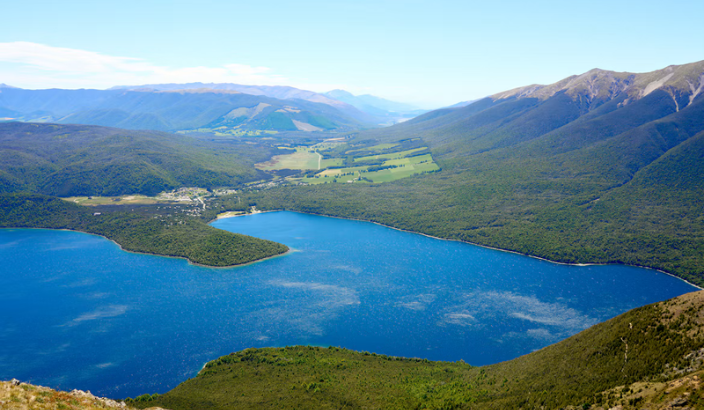
A proposal to recognise Rotoiti as an official alternative name for St Arnaud has the backing of Rangitāne o Wairau, who say the move is about restoring a historic name and recognising customary relationships with the landscape.
Public consultation opened on the proposal in October, following similar dual naming approaches for other Top of the South locations, including Pelorus Sound / Te Hoiere and Golden Bay / Mohua.
The alpine village was originally known as Rotoiti before the Post and Telegraph Department adopted St Arnaud in the late 1940s to avoid confusion with Rotoiti in the central North Island.
Two attempts over the past 20 years to restore Rotoiti were declined by the New Zealand Geographic Board. A survey last year found 60% of respondents favoured retaining St Arnaud, while the Rotoiti District Community Council also opposed the change.
The Geographic Board agreed in October to progress Rotoiti as an official alternative name, allowing the existing name to remain.
Ngāti Kuia representative Eugene Whakahoehoe says Rotoiti also holds significance for iwi across Te Tauihu.
"Rotoiti holds significance for iwi within Te Tauihu. We have supported the application as a way to recognise the customary relationships with spaces throughout Te Tauihu."
Rangitāne o Wairau general manager Corey Hebbard says the name has deep connections to the lake, the whenua and generations of tangata whenua who have lived in and moved through the landscape.
Historical evidence includes correspondence from Rangitāne tūpuna Paraone Taituha to Governor Eyre in 1851, using Rotoiti while asserting his connection and mana over the whenua.
Corey says traditional place names carry whakapapa, history and identity, with their restoration helping bring important history into the everyday landscape.
While Rangitāne's preference last year was for Rotoiti to replace St Arnaud, Corey says recognising both names is a positive step.
Saint Arnaud - a 19th century French military commander - remains a controversial figure for atrocities committed during the French conquest of Algeria, with campaigners citing this as a reason for backing change.
Corey says, however, "the strongest reason for recognising Rotoiti is Rotoiti itself: it is an enduring name of this place with a history that substantially predates St Arnaud."
The consultation is open until 17 February, providing an opportunity for the community to have its say before a final decision is made.
